The UT Southwestern Research Data Repository helps researchers publish, preserve, and share research data, code, and documentation. The open-access repository assigns DOIs, making small to medium sized datasets under 50GB discoverable and citable while supporting funder and publisher requirements. All datasets must be public, deidentified, and free of confidential or sensitive information. Researchers can also update datasets and receive support from the Library. Check out the UT Southwestern Research Data Repository Guide to learn more.
Starting new research? Find a proven protocol
The Library connects you with trusted resources for step-by-step research protocols covering a wide range of biomedical techniques. Whether you are planning a new experiment, selecting a method, or refining an existing procedure, our resources can help you find established approaches and detailed instructions. Visit the Protocols section of the Library’s GSBS Guide to explore available resources and get started.
New APC Journal Search Database
The Library is pleased to announce a faster way of determining which journals have waivers or discounts. Introducing the APC Journal Search Database, which is now available in the Article Processing Charges (APCs) Guide. (Please note: UT Southwestern authentication is required to use the database.)
The system allows you to search by journal or publisher. You can also search for keywords in a journal title like “Neurology”. The search results will display the Journal Title, Publisher, Open Access Model, and Discount Value. “Full” means the APC is fully covered.
Update on Wiley APCs
The Library has provided a transformative publishing agreement with Wiley for several years that provides open access publishing at no charge to UT Southwestern, but this agreement allows for a maximum number of articles to be published each year. For 2026, this maximum is 149 articles.
As of August 1, we have less than 30 articles remaining, and once the maximum is reached, UT Southwestern authors will need to find alternative funding for the articles if they wish to publish them as open access in Wiley journals. We estimate this may happen in mid- to late-September.
Until that time, please be aware that articles aren’t officially counted towards the agreement until they are officially accepted. For articles submitted to a hybrid Wiley journal, acceptance happens when the article enters the publication queue and after peer review has occurred.
However, articles submitted to a Wiley or Hindawi fully open access journal follow a different path because they enter the publication queue when they are submitted and still need to go through the peer review process. They are only accepted after the review process is complete, which may take a long time.
Once the cap is reached, authors who already have articles in the publication queue will be notified that funding is no longer available, and they will have the option of either proceeding with open publishing if alternative funding can be found or choosing to publish their article behind the subscription paywall.
If you have any questions about this or would like to discuss things further, please contact LibraryOA@UTSouthwestern.edu.

New Ebola resources added to Infectious Diseases and School of Public Health Guides
Ebola resources for healthcare professionals have been added to the Infectious Diseases Guide and School of Public Health Guide.
Information includes clinical management, diagnostic testing, personal protective equipment (PPE), infection prevention and control, outbreak response, preparedness planning, and emerging research. These links will be reviewed and updated periodically to ensure access to the most current guidance and recommendations.
The section also includes select eBooks!
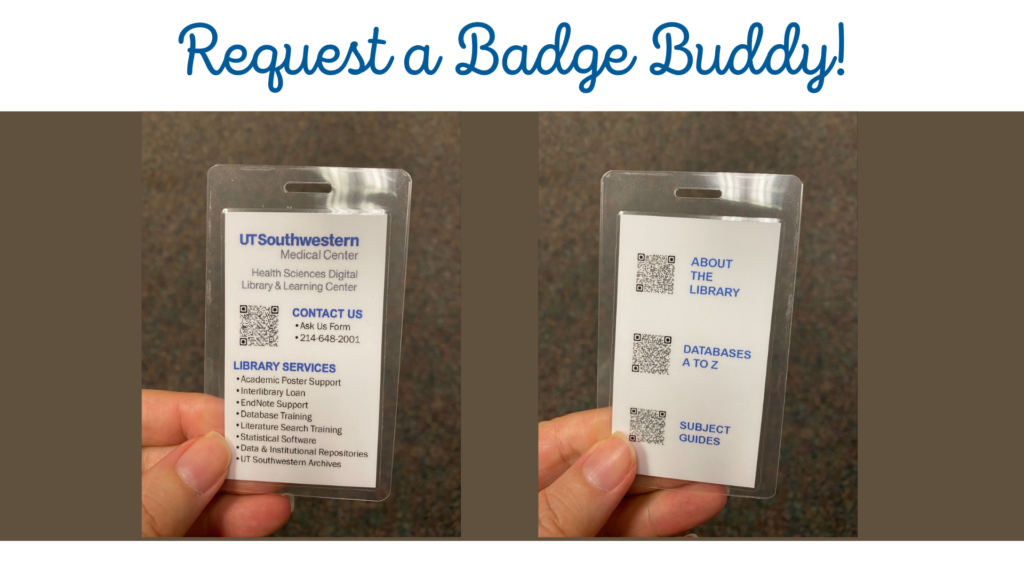
Request a Badge Buddy
The Library has created handy badge buddies with helpful QR codes to connect you quickly to your Library resources. We can send it to your campus mailbox. Email LibAsk@utsouthwestern.edu to request yours today.

Bring out your creative side with On My Own Time!
Entries are now being accepted for this year’s On My Own Time (OMOT) employee art show and competition, a program of the Business Council for the Arts.
Whether your medium is painting, photography, textiles, mixed media, or the written word, there’s a category to show off your creative flair. The deadline for submissions is July 7. Before you make a submission, please be sure to familiarize yourself with the rules for entry on the OMOT website.
Visual art will be showcased at the A.W. Harris Faculty-Alumni Center from July 20-September 9, and literary works will be uploaded to the UT Southwestern Institutional Repository at the same time. Winning visual works will be included in a regional show at North Park Center starting Sept. 16, and authors of winning literary submissions will be invited to present works at a literary reception at Dallas College on Oct. 15.
Library to be closed temporarily on July 6 during completion of furniture installation
The Library will be temporarily closing its facility July 6 to install the rest of the furniture.
Having issues accessing PubMed off-campus?
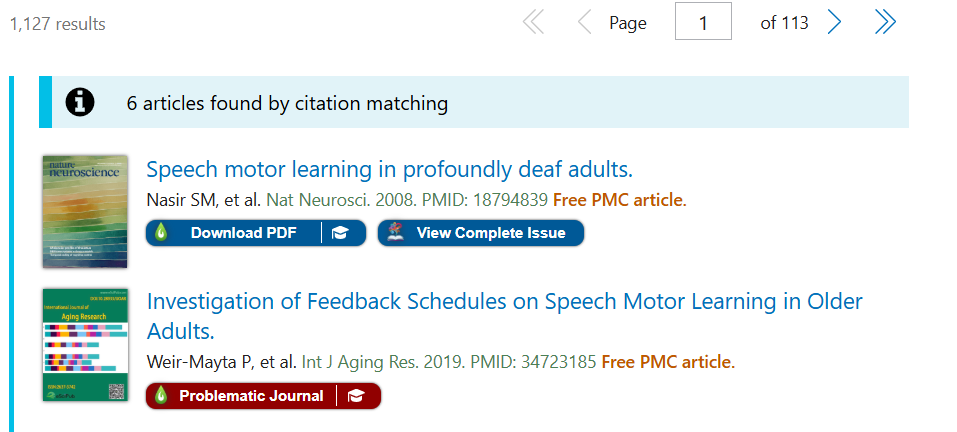
PubMed has identified a persistent EZProxy issue affecting off-campus access. The issue is related to a Cloudflare complication impacting reCAPTCHA functionality. As a result, we have removed the EZProxy link to PubMed.
When accessing articles from PubMed off-campus, please use the “Find It – UTSW Library” article links as opposed to the publisher links. This will direct you to the LibKey link for the article, which can then be accessed successfully through EZProxy.
Alternatively, you may access PubMed resources by connecting through VPN.
New Accessible Poster Templates
The Library has launched accessible academic poster templates in response to the federal accessibility mandate, aiming to remove longstanding barriers in scholarly communication. Designed with features like high-contrast color schemes and structured reading order, the templates enable researchers of all abilities to present their work more inclusively without sacrificing visual rigor. The initiative not only ensures compliance but signals a broader shift toward universal design as a baseline standard in academic publishing.